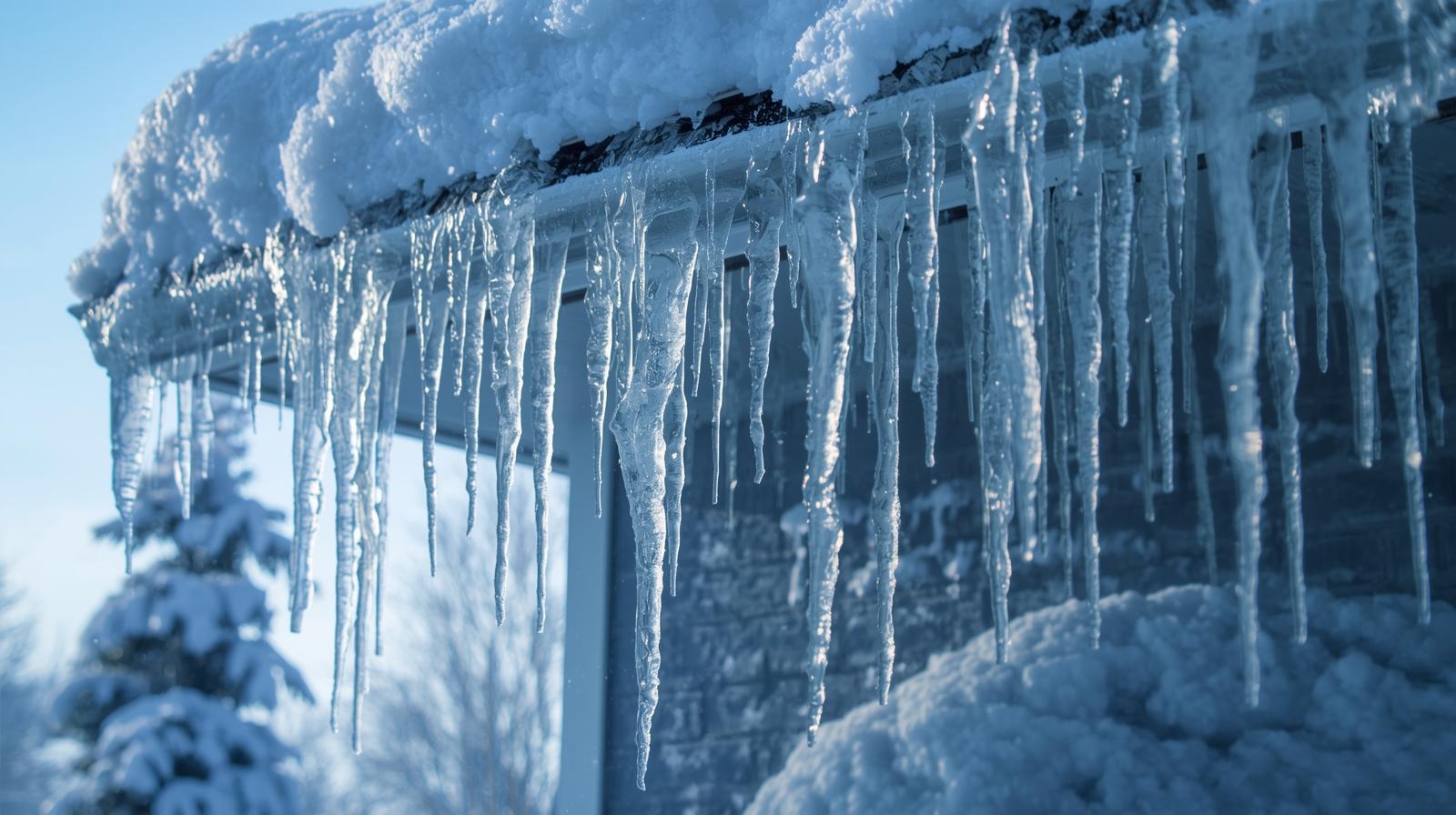
The ridge of ice along your gutters every February is not a roofing fault. It is heat leaving your house through the ceiling, melting the snow above it, and that meltwater refreezing when it reaches the cold overhang past the heated part of the building.
That is worth knowing before you pay anybody to fix a roof that is not broken.
What is actually happening
Warm air rises out of the living space into the attic through gaps you cannot see: around recessed lights, at the top plates of interior walls, around plumbing stacks, through the hatch. It warms the underside of the roof deck. Snow sitting on that warm deck melts.
The water runs down the roof until it passes the exterior wall. Beyond that line there is no heated space underneath, the deck is at outdoor temperature, and the water freezes. Repeat that over a few cold nights and you have built a dam. Water then backs up behind it, under the shingles, and into the wall and ceiling.
Which is why a house with an ice dam often shows a stain on an upstairs ceiling in March and the homeowner concludes the roof has failed.
Why heat tape and roof raking are not the fix
Both treat the symptom. Raking the lower roof removes the snow that would have melted, and heat cable melts a channel through the dam. Neither stops the heat loss that caused it, and both have to be done again every year.
The actual fix is a boring one: air seal the ceiling plane, then insulate it properly, then make sure the attic is ventilated so the roof deck stays close to outdoor temperature. Air sealing first — insulation laid over unsealed gaps does much less than people expect, because the heat is moving with the air, not just conducting through the material.
How you tell it is your problem and not the weather
A few signs. Ice forms on your house and not on the neighbor’s identical one. The icicles are at the eaves and over the garage but not over the unheated porch. Upstairs rooms are cold while the thermostat says otherwise. Snow melts off your roof faster than off the ground.
Any of those points at the ceiling, not the shingles.
And there is money for this
Attic air sealing and insulation is the single most commonly funded measure in every Michigan energy program, because it has the best ratio of cost to energy saved.
Consumers Energy pays toward it with no income test at all, up to a published maximum of $3,750. The Michigan Home Energy Rebates program pays considerably more for households that qualify on income, and for the lowest-income households must cover 100% of the approved work. The Weatherization Assistance Program does it at no cost for households at or below 200% of the federal poverty level.
None of which you can find out from a roofer.
Start with an assessment, not a quote
A proper home energy assessment uses a blower door to measure how much air is leaving the building and infrared imaging to show where. On an ice dam house it usually finds the leak paths in minutes, and it is the same assessment every one of those rebate programs is built on.
If something is actively leaking into the house right now, deal with that first — that is a repair, not a program.