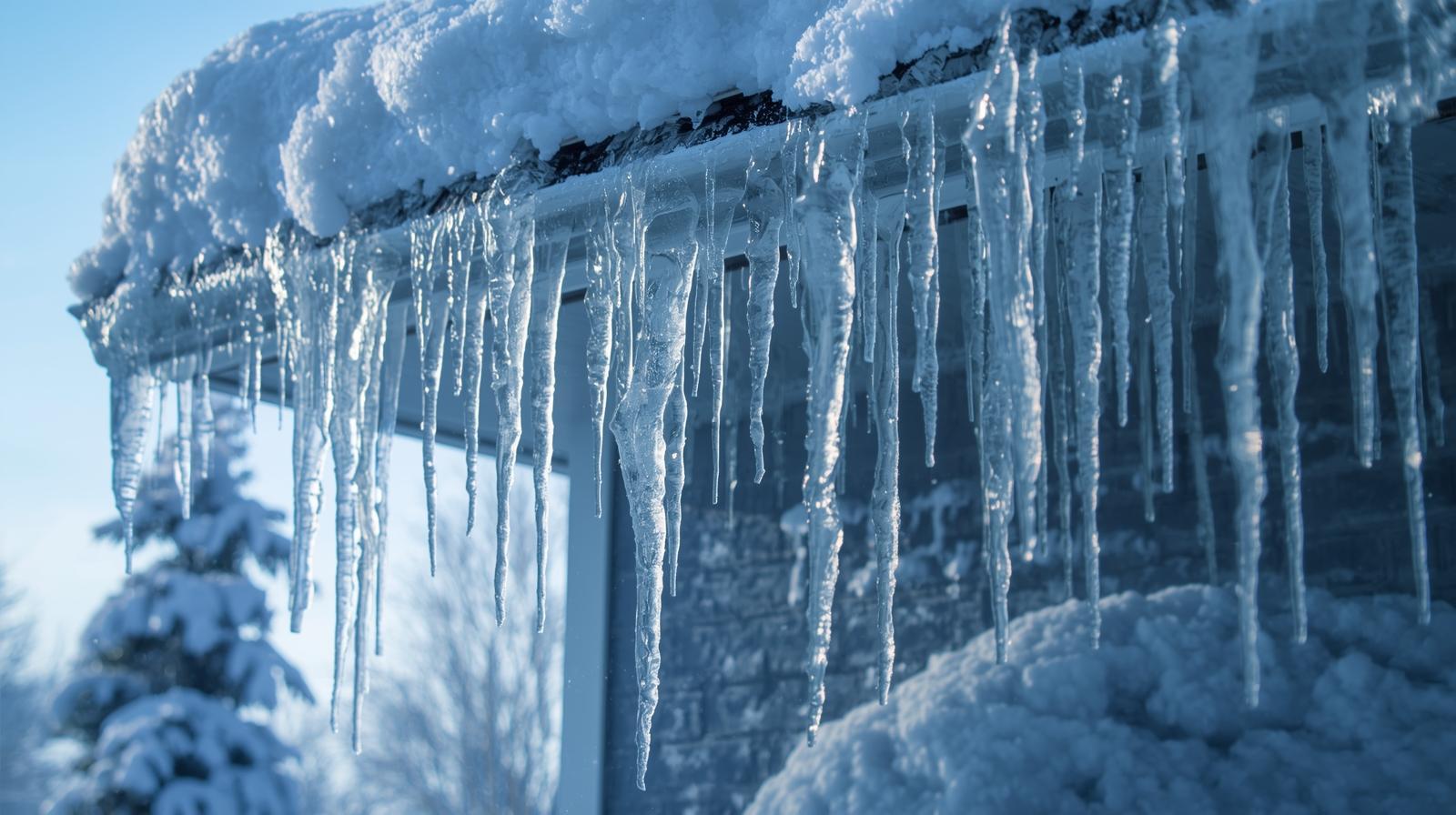
Ice Dams in Michigan: Why They Form and What Actually Stops Them
An ice dam is caused by heat escaping from the house, not by the weather and not by the gutters. The sequence is always the same three steps: warm air leaks from the living space into the attic and heats the underside of the roof deck; the snow on that part of the roof melts; the meltwater runs down to the eave and the overhang, which is not over heated space and is still at outside temperature, and refreezes there.
Repeat that for a week and you get a ridge of ice at the edge of the roof with standing water behind it — and standing water on a shingle roof goes under the shingles, because shingles shed water, they do not seal against it. That is when it appears inside as a stain on a bedroom ceiling or at the top of a wall.
Which is why the durable fix is inside the attic, not at the gutter. Air-seal the leaks — around light fittings, the loft hatch, pipe and wire penetrations and the top plates — then insulate to a consistent depth, then make sure soffit-to-ridge ventilation is actually open and not blocked by that insulation. Gutter guards, heat cable and roof raking manage the symptom; none of them stops the melt.
Our roofline work is gutters, soffit, fascia and flashing. We do not touch roof coverings, and where the damage has gone past the roofline that goes to a roofer.
What Causes the Ice Dam Disaster?
An ice dam isn't caused by cold weather alone; it’s caused by a temperature imbalance on your roof. This process involves three steps:
- Heat Loss: Warm air from your living space leaks into the attic (due to inadequate insulation or poor ventilation), warming the central section of the roof.
- Snow Melt: This warm roof melts the layer of snow directly above it, even if the outdoor temperature is below freezing.
- Refreezing: The resulting meltwater runs down the roof until it reaches the cold, unheated eave or gutter line, where it refreezes.
As this process repeats, the ice ridge grows, creating a "dam" that traps all subsequent meltwater behind it.
The High Price of Ice Damage
When water can no longer flow off the roof, it pools behind the dam and works its way upwards—under your shingles, roofing felt, and into your home's structure. This can lead to:
- Interior Water Damage: Stains on ceilings and walls, peeling paint, and ruined drywall.
- Structural Damage: Rotting roof sheathing, fascia boards, and exterior trim.
- Insulation Failure: Soaked insulation in the attic loses its R-value, leading to even more heat loss and higher energy bills.
- Gutter Damage: The sheer weight of the massive ice dam can pull gutters completely off the fascia board, leading to expensive repairs.
What Actually Stops an Ice Dam
An ice dam is a heat problem wearing a gutter problem’s clothes. Snow on the roof melts because warm air is escaping from the house into the roof space; the meltwater runs down to the eave, which is cold because there is no house underneath it, and freezes there. The ridge of ice that builds up holds the next lot of water back until it finds a way under the shingles.
That is why the fix is upstream of the gutter:
- Air sealing. Close the gaps letting warm air into the roof space — around light fittings, the loft hatch, bathroom and kitchen fans, plumbing stacks and the top plates of interior walls. This is the single biggest lever and usually the cheapest.
- Insulation. Bring the depth up to a consistent level across the whole ceiling, with no thin patches over the eaves where the dam actually forms.
- Ventilation. Let the roof space run at outside temperature, so the deck stays cold enough that the snow on it does not melt in the first place.
- Exhaust that leaves the building. A bathroom fan venting into the roof space instead of outdoors is a small permanent snow-melting machine.
What Does Not Stop One
Gutter covers and screens do not stop ice dams, and some make them worse by giving snow and ice a lid to build on. Heat cable does not stop one either — it melts a channel through the ice so water has somewhere to go, which is damage control, not prevention, and it runs up your electricity bill every winter it is switched on.
Clearing the gutters in autumn is still worth doing: a gutter packed with leaves holds standing water that freezes, and the weight of that ice is what pulls gutters off the fascia. Just do not expect it to prevent a dam on its own.
Ready for Year-Round Protection?
If you have had a ceiling stain, icicles along one section of eave, or a gutter come loose in winter, the roof space is where the answer is. We will look at the insulation, the air sealing and where the exhaust fans actually vent, and tell you what is causing it — including when the honest answer is that it needs a roofer or an insulation contractor rather than us.
Call Haslett Handyman Company on (517) 505-7135. Quotes are free and there is no call-out charge.
Why do ice dams form in the first place?
Heat escaping into the roof space. Warm air from the house melts snow on the upper roof, the meltwater runs down to the cold eave beyond the heated envelope, and refreezes there. That ridge of ice then holds the next lot of water back until it finds a way under the shingles.
That is why ice dams are fundamentally an insulation and ventilation problem rather than a gutter problem. Gutters and guards affect what happens to the water; they do not stop the ice forming.
What are the warning signs before damage shows inside?
Thick icicles along one section of eave and not others, a visible band of ice at the gutter line, patches of roof clearing of snow faster than the rest, and damp or staining at the top of an exterior wall or in a ceiling corner. If snow is melting off one part of your roof much faster than the rest, that is where heat is escaping.
Get it looked at before winter
Call 517-505-7135 for a free estimate on gutter and ice-dam work across the Lansing area.
Related
- Gutters and roofline — gutters, soffit, fascia and flashing
- Water-damaged drywall: repair or replace? — when it has already shown up on a ceiling
- Handyman in Grand Ledge — moisture that starts outside the house