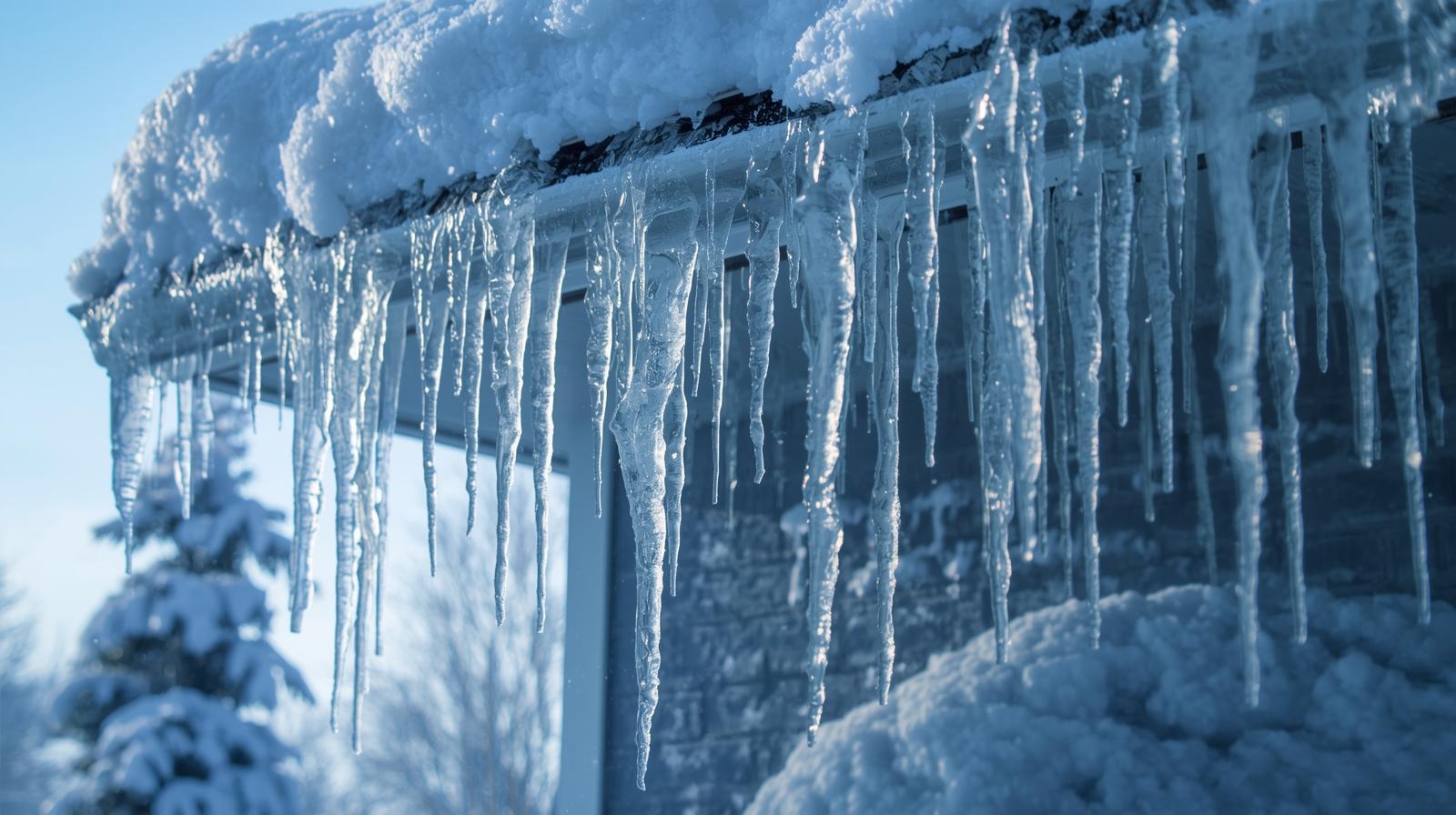
Snow removal in the Lansing area is quoted per property, and a number given over the phone before anybody has looked at the surface is a guess dressed up as a quote.
Six things decide it, and they are the six things anyone honest will ask you about: how big the surface is, whether it is a driveway or a parking lot, how many walkways and entrances go with it, whether you want salt laid as well as snow moved, how often you want somebody to come, and where the snow is going to be pushed to once it is off. A quarter-acre driveway in Haslett and a commercial lot on the west side of Lansing are not the same job and do not carry the same number.
The other half of the answer is the calendar. Mid-Michigan snow contracts are agreed in October and November — before the first plowable snow, not during it. By January every contractor with a plow is already committed to the properties that booked in the autumn, and the person calling round after a storm is choosing from whoever is left.
What actually changes the price
Snow work is priced off the property, not off a rate card, and these are the variables that move it. If you can answer them before you call, you will get a straight number faster.
- The size of the cleared surface. Not the size of the lot — the size of the part that has to be passable. A long shared drive with a turning area at the end is more work than a short double drive on a bigger plot.
- Driveway or parking lot. A parking lot has to be cleared in a pattern that leaves the bays usable and the traffic lanes open, and in a way that does not bury the spaces just cleared. That is a different piece of work from pushing a driveway back twice.
- Walkways, entrances and steps. These are hand work, or machine work at walking pace, and on a commercial site they are frequently the part that takes longest. They are quoted separately from the lot for that reason.
- Salt, or no salt. Laying salt is its own line. Some properties want the lot plowed and nothing else, some want walkways salted every visit, some want salt only after a thaw and refreeze. It is a decision worth making deliberately rather than by default.
- How often, and on what trigger. Per visit or seasonal, and at what depth somebody comes out. Two inches and four inches are very different numbers of visits across a mid-Michigan winter.
- Where the snow goes. A property with somewhere to stack it is straightforward. A property with no run-off area, a fence line on both sides, or a neighbouring lot that cannot be encroached on takes longer every visit — and by February it takes longer still, because the stack is already there.
- How many properties. A landlord with six addresses is a different proposition from one house, because the round can be planned as a route. That is priced per property, and the per-property figure is not the same as the one-off figure.
Plowing, clearing and salting are three separate jobs
This matters more than it sounds, because it is where most disagreements about a winter invoice start.
On the one commercial site this company plowed through the winter of 2025–26, the parking lot and the walkways were cleared as one piece of work and the salt was laid as another, and they were invoiced as separate lines. That is not an accounting quirk. They are separate decisions: you can have the lot plowed and no salt, or the walkways cleared and salted while the lot waits. A quote that fuses all of it into one figure is a quote you cannot adjust when the winter turns out mild, and one you cannot check when it turns out hard.
So ask for it broken out. Plowing the lot, clearing the walkways and entrances, and laying salt should be three lines with three numbers, whatever the total comes to.
Why October is the month to do this
Snow contracting runs on a hard seasonal cycle in mid-Michigan and it does not wait for you.
By the time the first plowable snow arrives, the properties that are going to be looked after are the ones that arranged it in the autumn. Everyone else is competing for the same evening. That is not a scare tactic; it is how a business with a finite number of machines and a finite number of hours in a storm has to allocate them, and every contractor in the area works the same way.
There is a second reason and it is the better one. October is when somebody can walk your property in daylight with no snow on it. They can see the gradient, where the water runs when it thaws, where the bays are, where snow can be stacked without blocking a sightline, and which kerb or manhole cover is going to catch a blade. None of that is visible at 5am in a storm, and a quote written without seeing it has an argument built into it.
What to ask before you sign anything
Whoever you use, these are the questions worth asking. They are the ones that decide whether a winter goes quietly.
- Is this per visit or per season, and what triggers a visit? Get the depth in writing. “When it needs it” is not a trigger.
- What exactly is included — lot, walkways, entrances, steps? Walk the property together and agree the boundary of the job on the ground.
- Is salt included, extra, or on request? And who decides when it goes down.
- Where is the snow going to be stacked? Agree it in October, because in February the answer becomes “wherever there is room”.
- What happens in an unusually heavy or unusually light winter? A seasonal price is a bet by both parties and you should both know its terms.
- Who is liable for what? Ask for a certificate of insurance. Anyone working a commercial lot should hand one over without being asked.
- What are you not doing? Roof snow, ice chipping, gutters and clearing to bare pavement are all things people assume are included and frequently are not.
What we will not promise, and why that is the useful part
Two things get promised in this trade that should not be.
A time. We do not put a clearance time in a contract. There is no dispatch record behind a promise like that here, a storm does not distribute itself evenly across a route, and a contractor who commits to eleven properties by 7am has committed to being late at most of them. What can be agreed instead is order of priority — which properties are done first, written down before the season starts.
A surface with no ice on it. Salt lowers the freezing point of water; it does not repeal it, it works poorly once it is cold enough, and a thaw followed by a refreeze happens in this state every winter. Anyone guaranteeing an ice-free surface is either not thinking about it or is hoping you will not read the contract. What salting does is reduce ice and improve traction, and that is what it should be sold as.
The flip side is worth saying too. There is no trip charge, no call-out fee and no charge for coming out to look at the property and quote it — true on all 84 written quotes this company has issued, in every trade it works in, and true in October for a lot with no snow on it yet.
How much snow work have we actually done?
One winter. It is a short record and you should weigh it as one.
Snow and ice work was invoiced between December 2025 and January 2026 for three customers: a commercial site where the parking lot and the walkways were plowed and salted through the season, a property-management company across several of its rental addresses, and a residential customer with two properties. That is the whole of it. It is invoiced work rather than a capability claim — but three customers over one winter is not a long plowing history and this page is not going to imply that it is.
What sits behind it is more established. This is the same crew that mows those properties through the summer, does the turnovers, clears the gutters and fixes the doors, and has been working in this area for fifteen years. For a landlord or a facilities manager the argument for one contractor across the year is simple: the person plowing your lot in January already knows where the drain is.
Where we work
Haslett, Okemos, East Lansing, Lansing, Holt, Mason, Williamston, DeWitt, Grand Ledge and Dimondale — commercial sites, rental portfolios and homes.
To have a property quoted for this winter, call (517) 505-7135. It takes a walk round the property and a conversation about what you actually want cleared.
Related
- Snow Removal & Plowing — what the service covers and how it is quoted
- Fall cleanup and winter prep — the outside jobs that have to happen before the snow does
- Ice dams in Michigan — why they are a heat problem rather than a snow problem
- What we have done in Lansing